
ABOUT ME
My path into product design wasn’t linear.
I studied Political Science, then spent seven years in luxury hospitality in New York. Both taught me to watch how people behave and what happens when systems fail them. Product design is where those two perspectives meet.
7 YEARS IN NYC HOSPITALITY · POLITICAL SCIENCE · CAREERFOUNDRY UX · BROOKLYN, NY
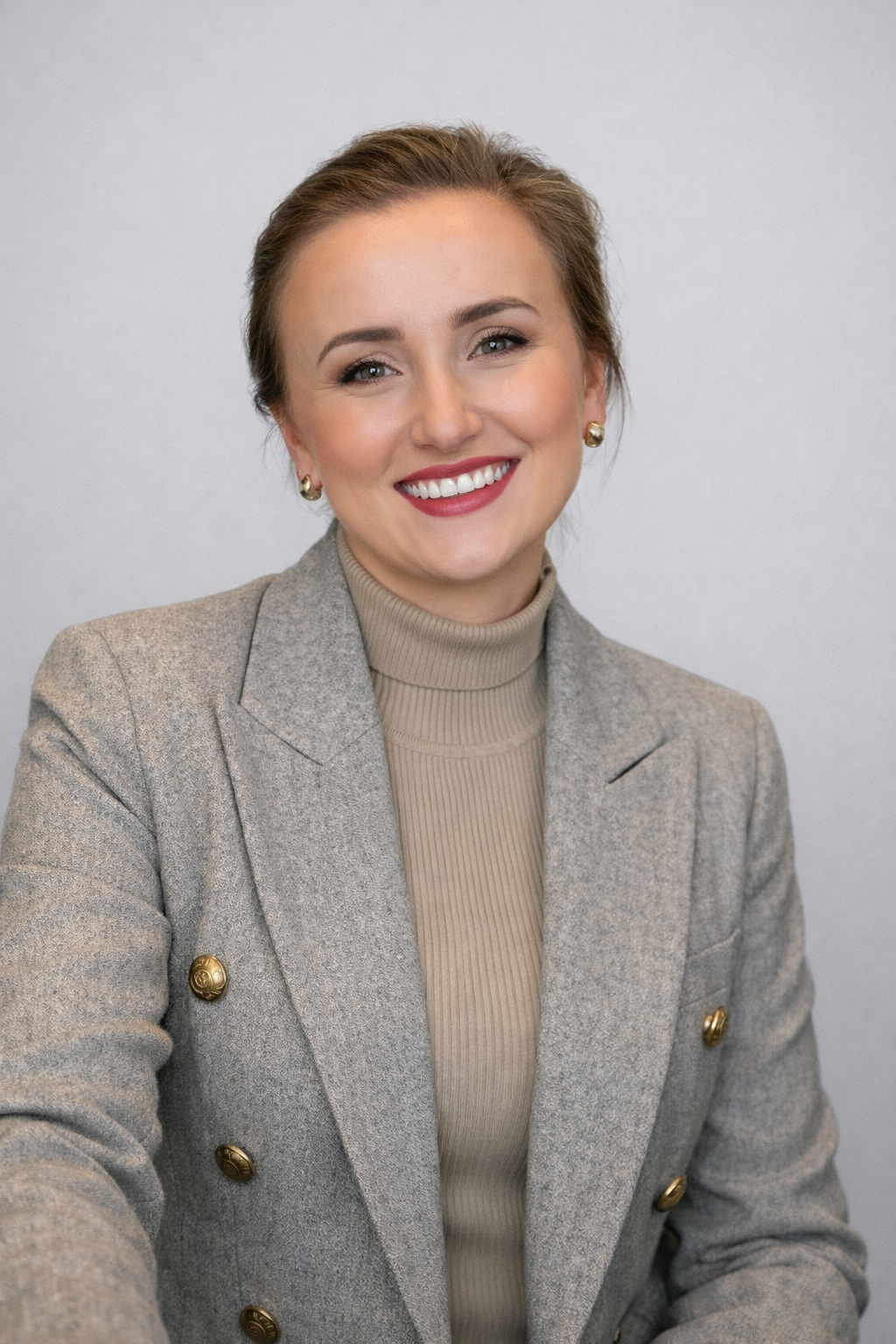
01 / BEFORE PRODUCT
Seven years in hospitality taught me how to design for people before I ever called it design.
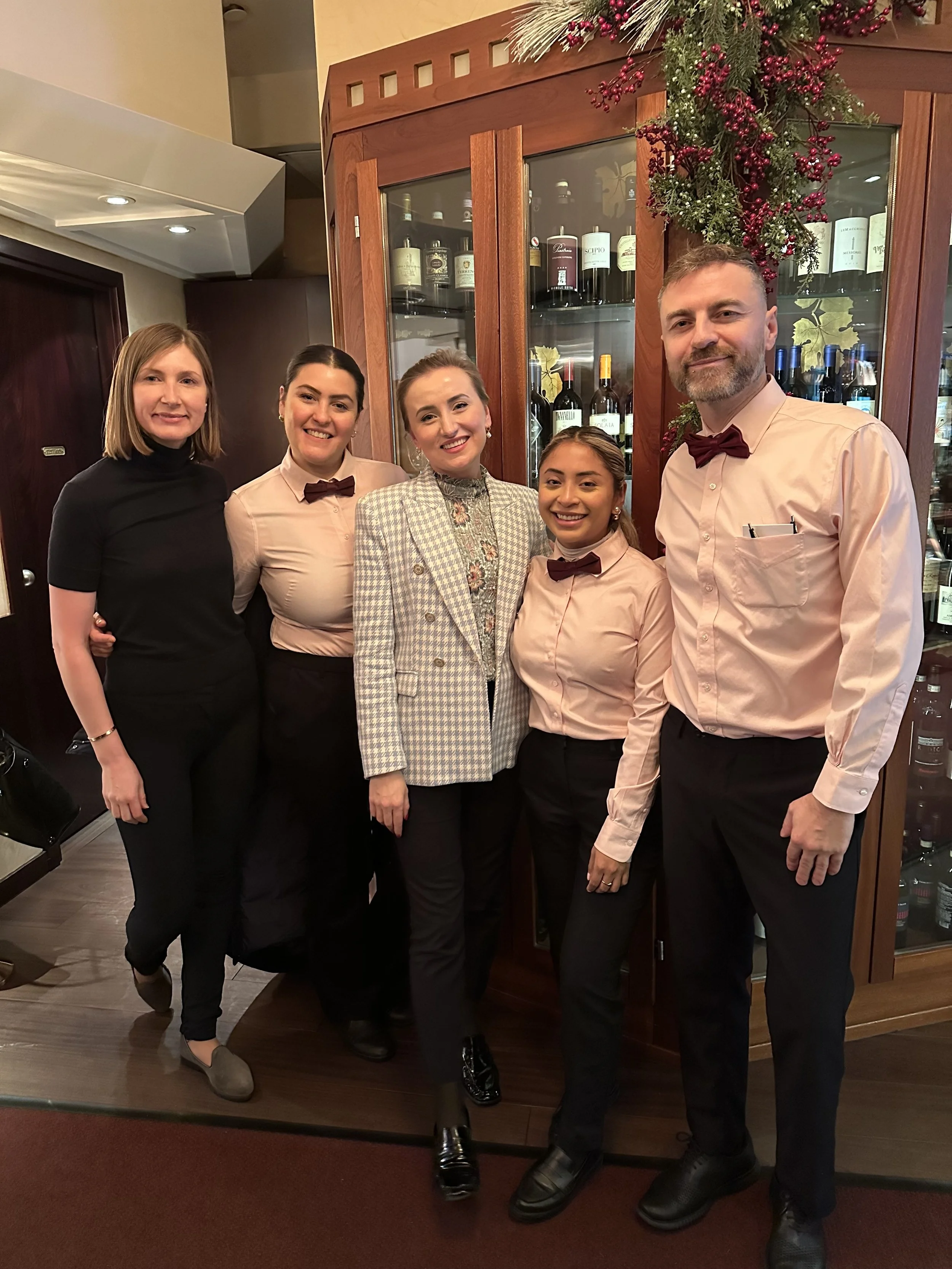
With my restaurant team in Manhattan, New York
I worked my way from hostess to Assistant General Manager at a New York restaurant known for high-profile guests, where expectations were high, requests were complex, and discretion mattered.
It taught me to listen closely, anticipate needs, and solve problems in real time without letting the complexity show. What I loved most wasn’t specific to restaurants: understanding people, and making things feel effortless from their side.
02 / THE PIVOT
Leaving hospitality wasn’t part of the plan.
I loved the work and was proud of the career I’d built, but the long hours and physical demands became unsustainable.
I didn’t want to lose what I loved: understanding people, solving complex problems, and making difficult experiences feel simple. Product design let me keep all of it, in a different medium.
What started as a career change felt like a continuation of the same work, with different tools.
03 / LEARNING THE CRAFT
I learned the tools. The instincts were already there.
At CareerFoundry I learned the process behind instincts I already had: research, interviews, information architecture, prototyping, usability testing, and interface design.
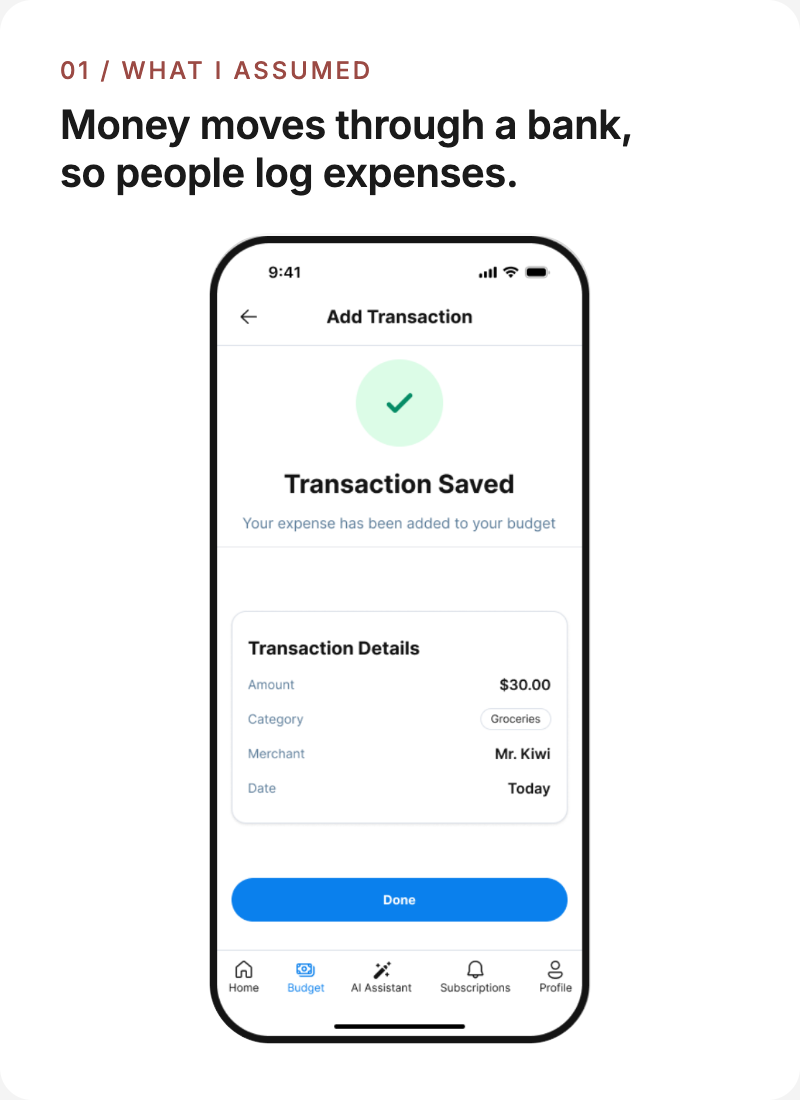
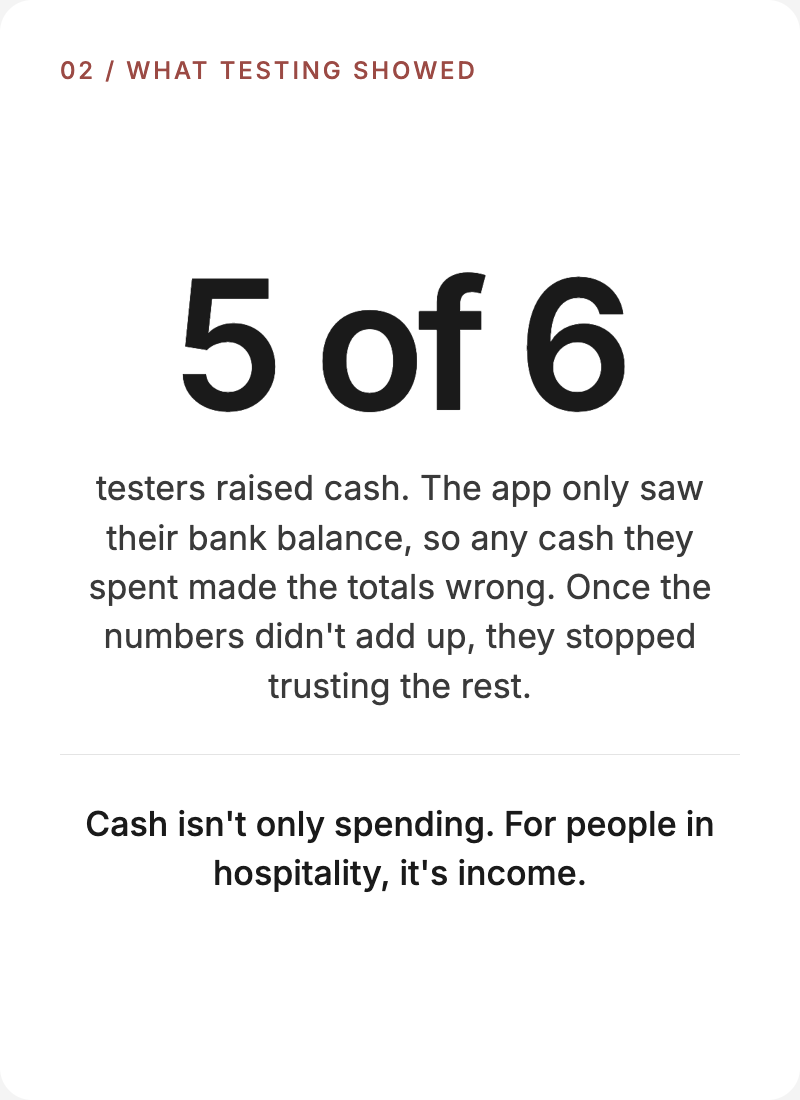
What changed most was learning to test my assumptions instead of relying on them, and to iterate until an experience worked. Here’s one example from ZenBudget.
04 / WHAT I BUILD TOWARD
I’m drawn to problems people have learned to live with.
My work starts where people piece together imperfect solutions because the right tool doesn’t exist. I learn how they actually navigate those experiences, then make the system feel simpler from their side.
01 / OBSERVE
Start with how people actually behave.
ZenBudget: testing showed cash was income, not spending, so the app changed direction.
02 / SIMPLIFY
Make complexity disappear for the person using it.
Sposai: one code per household and one question per step for a three-day RSVP.
03 / BUILD
Turn insight into something people can actually use.
Both: Sposai ran our real wedding; ZenBudget is a coded prototype, not static screens.