01 — OVERVIEW
Budgeting wasn’t built for people whose income changes every shift.
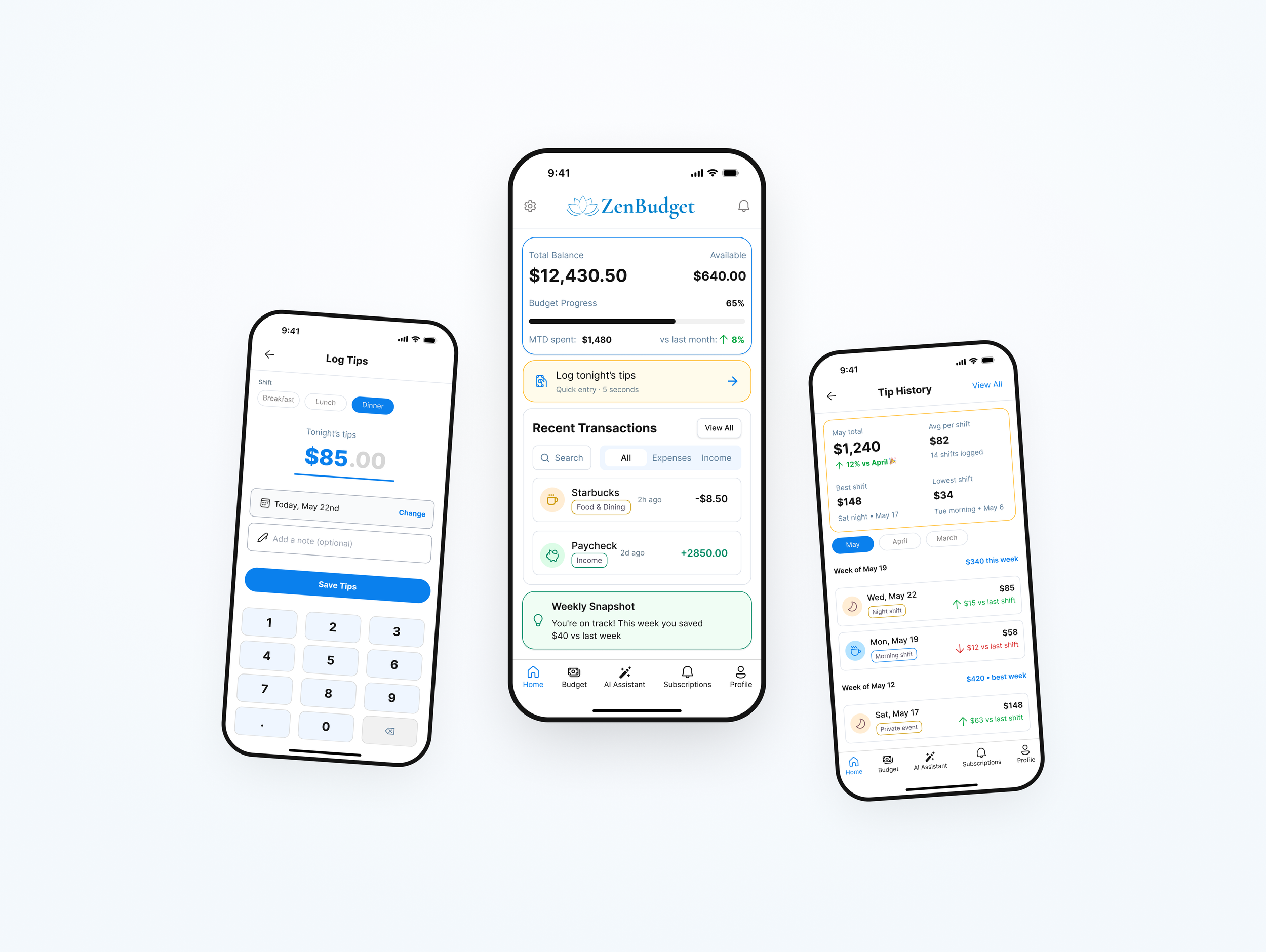
ZenBudget is a mobile budgeting product designed around the realities of hospitality work—where hourly wages, tips, schedules, and income can change from one shift to the next.
ROLE
Product Designer · UX Researcher
PROJECT
Independent Concept Project
FOCUS
Fintech · Variable Income
YEAR
2025-2026
02 — THE PROBLEM
Traditional budgeting assumes predictable income.
Hospitality workers often earn money from multiple sources—hourly wages, cash tips, and card tips—while the amount they take home can change significantly from one shift to another.
Yet most budgeting tools begin with a number this audience may not actually know: their monthly income.
PREDICTABLE INCOME
Salary
Regular paycheck
Known pay cycle
Income is easy to anticipate
HOSPITALITY INCOME
Hourly wages
Cash + card tips
Changing shifts
Income varies week to week
Most budgeting tools are built for predictable income. ZenBudget started with variable income instead.
03 — THE INSIGHT
Hospitality workers don’t think in days.
They think in shifts.
After years of working in hospitality—and conversations with people navigating the same income patterns—one thing became clear: earnings are remembered by the shift.
Saturday night. Tuesday lunch. A double. A slow Sunday.
That changed the way I approached the product. Instead of forcing variable income into a traditional monthly model, ZenBudget organizes earnings around the way hospitality workers actually experience them: shift by shift.
04 — THE CORE EXPERIENCE
Logging a shift should take seconds, not feel like a chore.
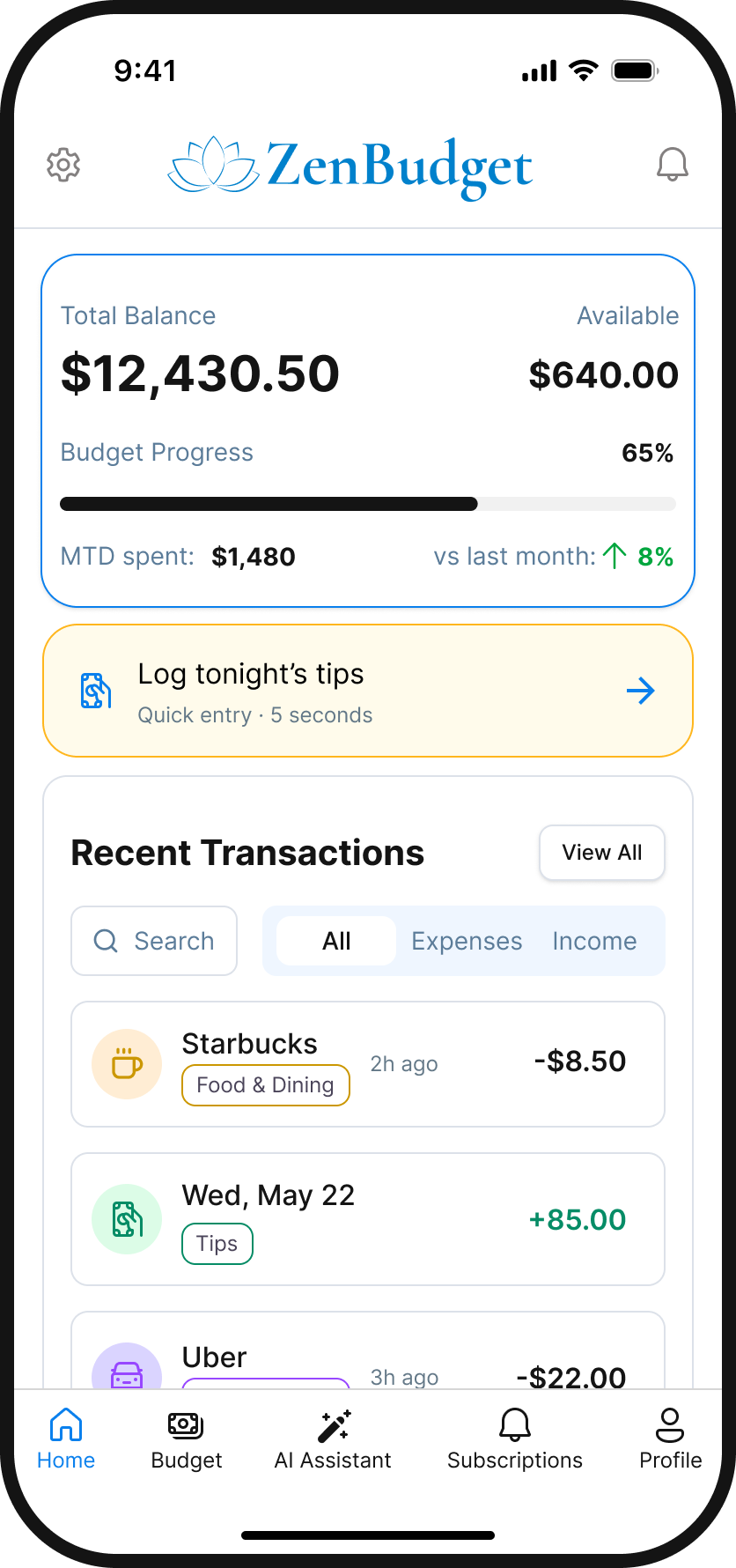
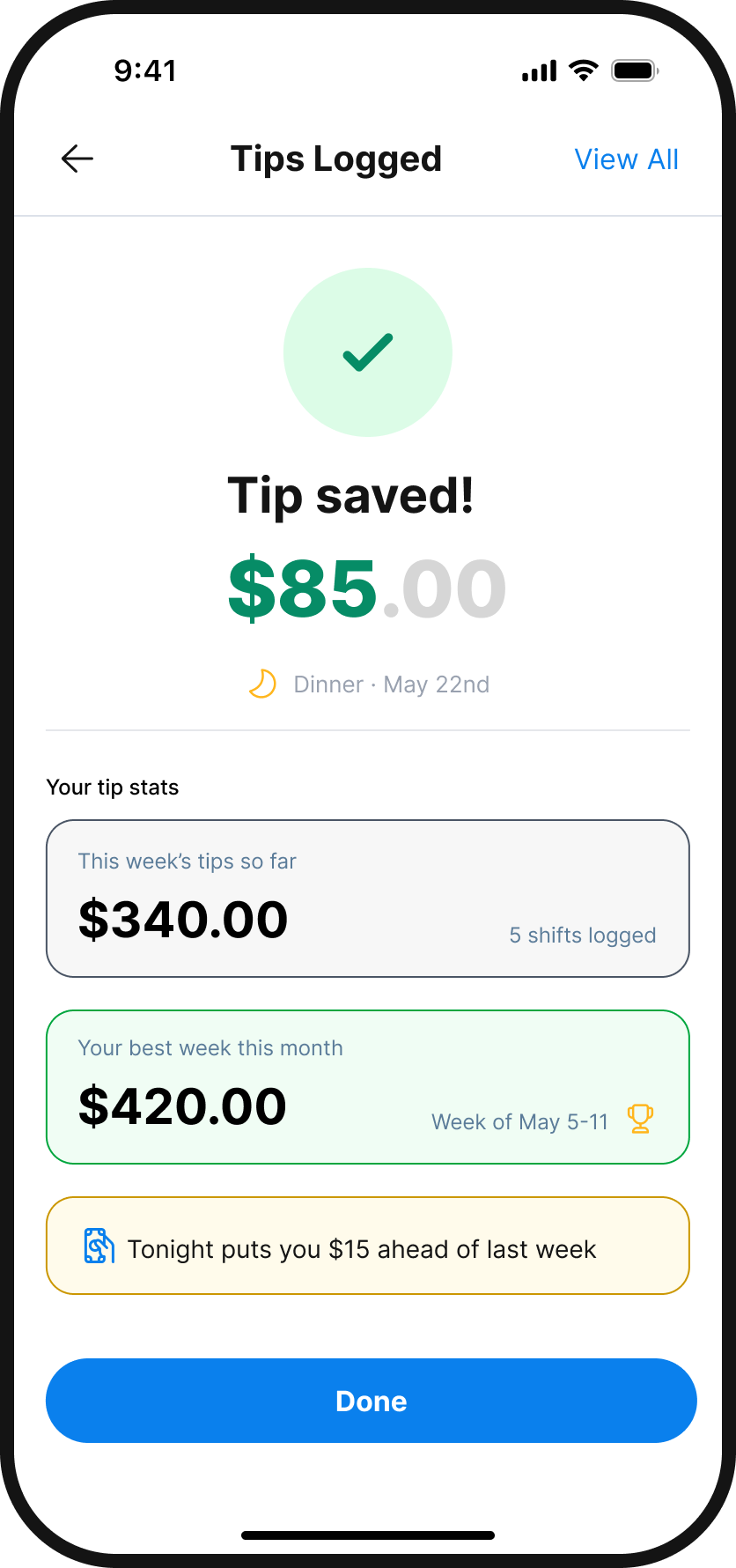
After a long shift, energy is low, and attention is limited. ZenBudget reduces tip tracking to a few effortless interactions—designed to be completed in seconds.
01 — START
02 — LOG
03 — DONE
06 — THE DESIGN DECISION
When energy is low, every interaction has to earn its place.
After a long shift, asking someone to navigate forms, type dates, or categorize every detail creates unnecessary friction.
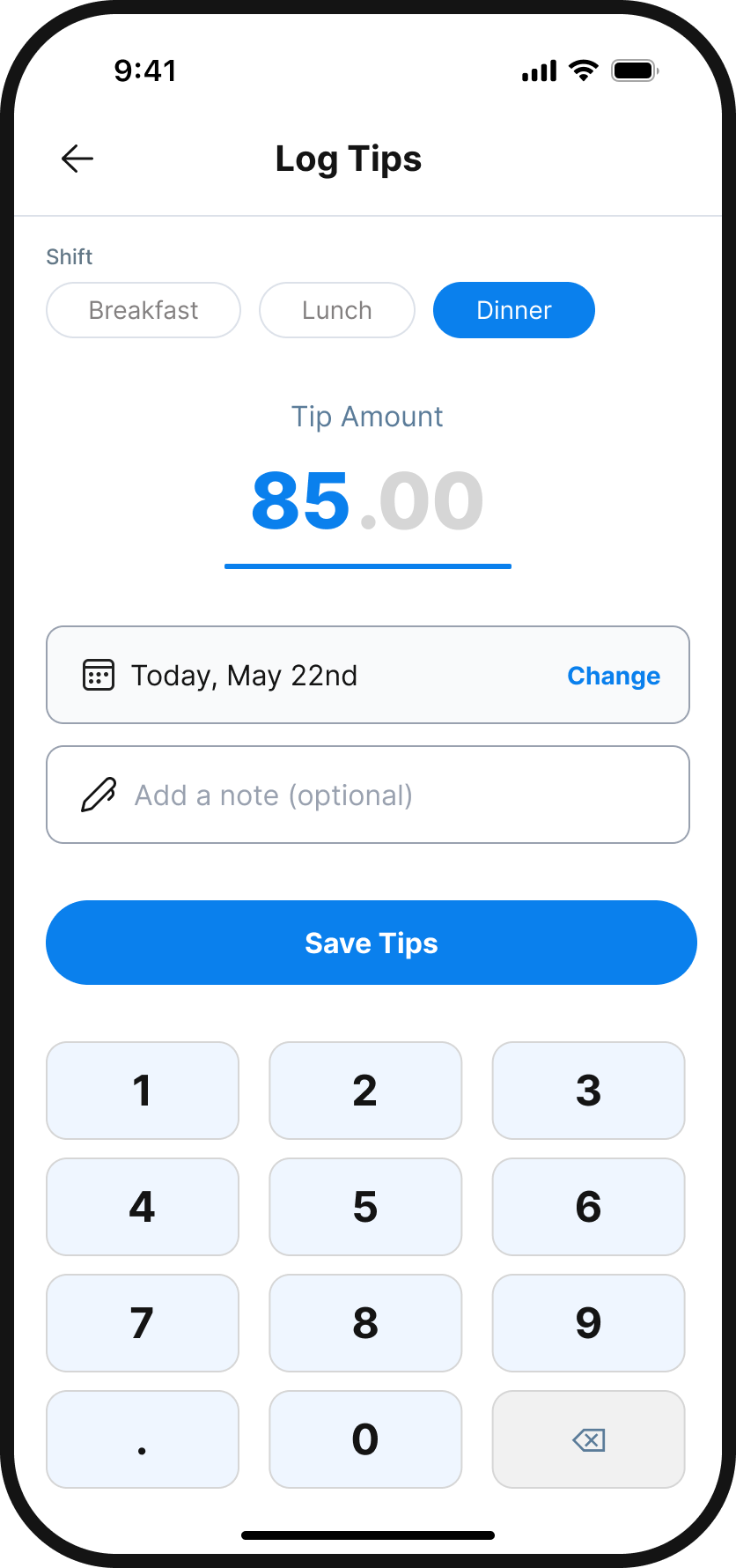
I designed the logging experience around familiar behaviors: tap a shift, enter an amount, save.
01 NUMPAD, NOT KEYBOARD
Numbers first.
No unnecessary typing.
02 SHIFTS, NOT DATES
Breakfast, lunch, and dinner match how hospitality workers remember their shifts.
03 NOTES, ONLY WHEN NEEDED
Optional context captures unusual shifts without slowing down everyday logging.
05 — THE BIGGER PICTURE
Tips are only one part of the financial picture.
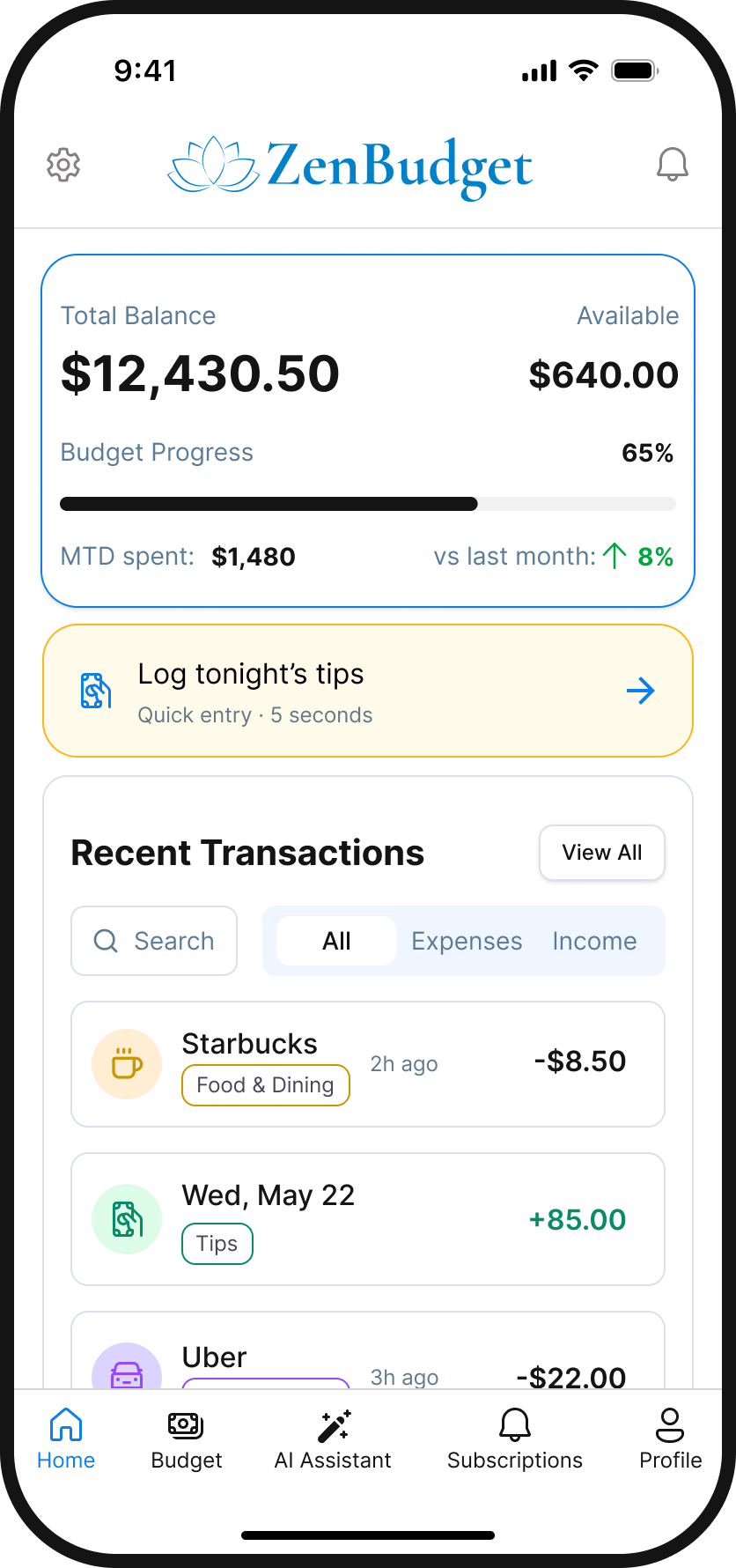
ZenBudget brings variable income into the same place as spending, budgets, subscriptions, and everyday transactions—so hospitality workers can understand their finances as a whole.
Tip tracking is the starting point.
The product is built around everything that happens next.
VARIABLE INCOME
Tips, wages, and shifts tracked together.
BUDGETING
Spending measured against what you actually earn.
SUBSCRIPTIONS
Recurring expenses visible in one place.
AI ASSISTANT
Guidance grounded in your actual financial activity.
07 — TURNING DATA INTO INSIGHT
A logged shift becomes more useful over time.
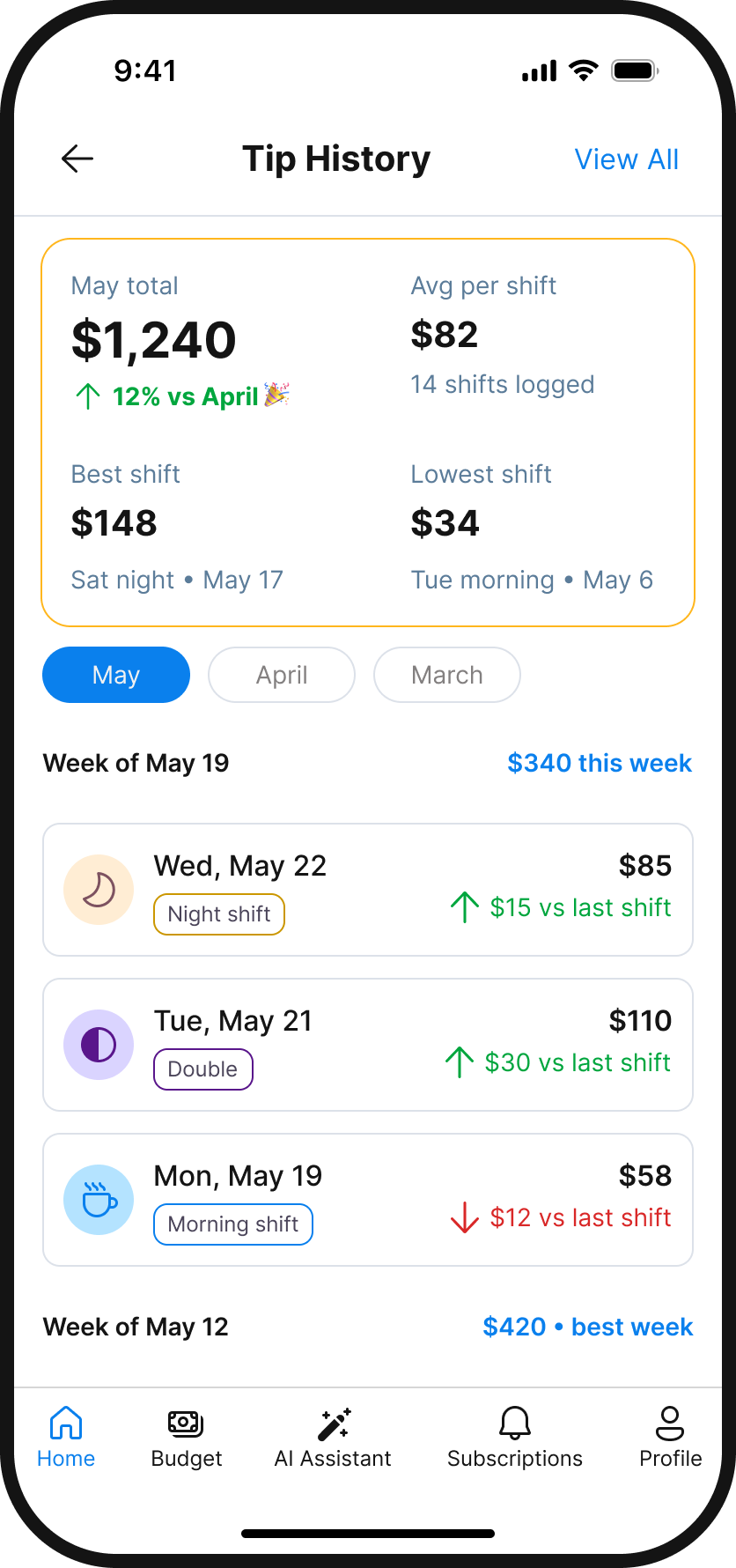
Individual shifts become patterns.
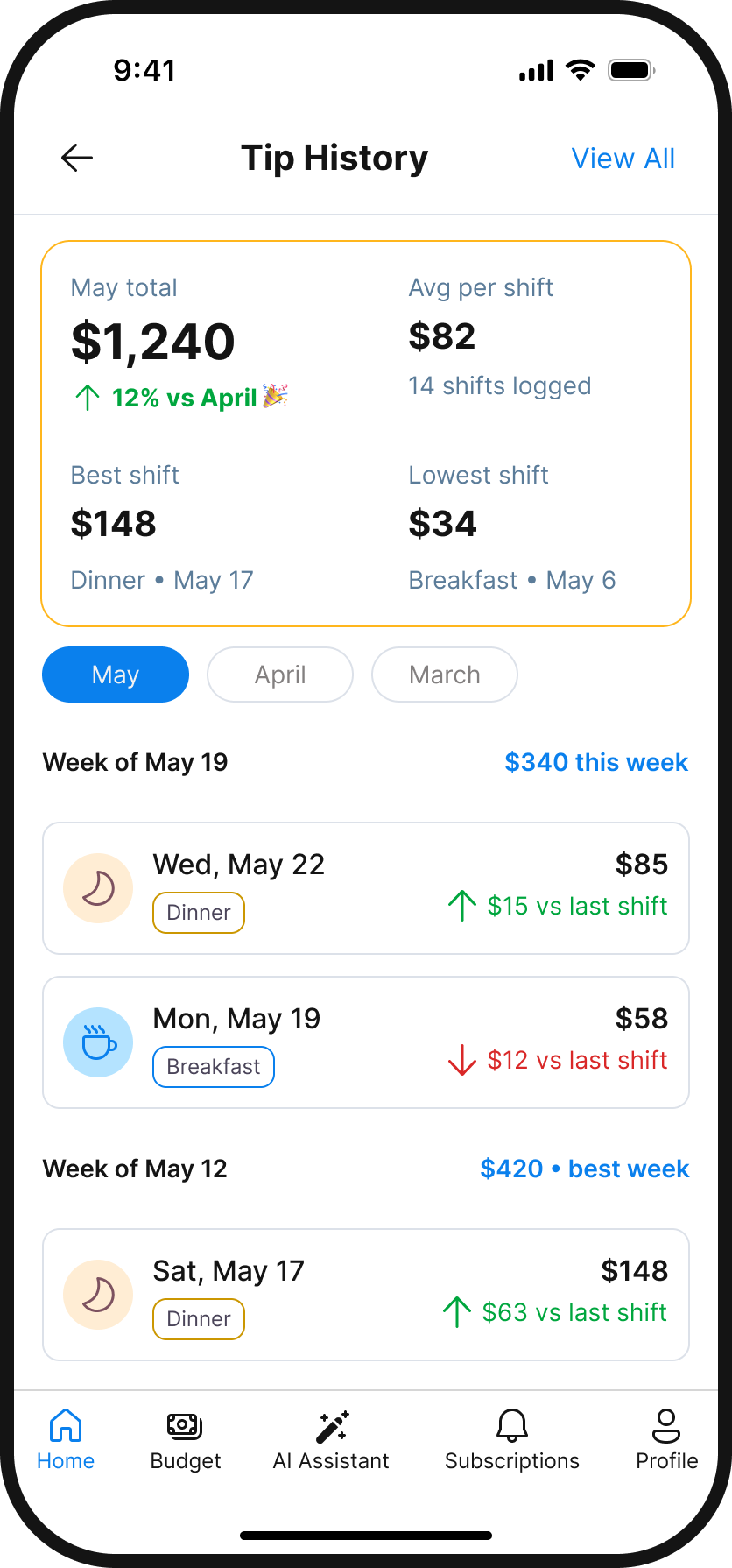
ZenBudget turns logged income into a history that workers can actually learn from, revealing their strongest shifts, slower weeks, and changes in earnings over time.
The goal isn’t just to record income.
It’s to make unpredictable income easier to understand.
08 — VALIDATION
Designed for the moment it actually gets used.
01 QUICK TO COMPLETE
The core logging flow was kept intentionally short, reducing the steps required to record income.
02 FAMILIAR LANGUAGE
Shift labels use familiar hospitality language: breakfast, lunch, and dinner, rather than asking workers to translate their routines into generic categories.
03 DETAILS STAY OPTIONAL
Notes add context when needed without becoming another required step.
09 — THE TAKEAWAY
Financial tools should adapt to how people actually live and work, not ask people to adapt to the system.
ZenBudget started with a simple question: “What would financial management look like if it were designed around the realities of hospitality work?”
The result is a simpler experience built around variable income, familiar routines, and minimized friction.